
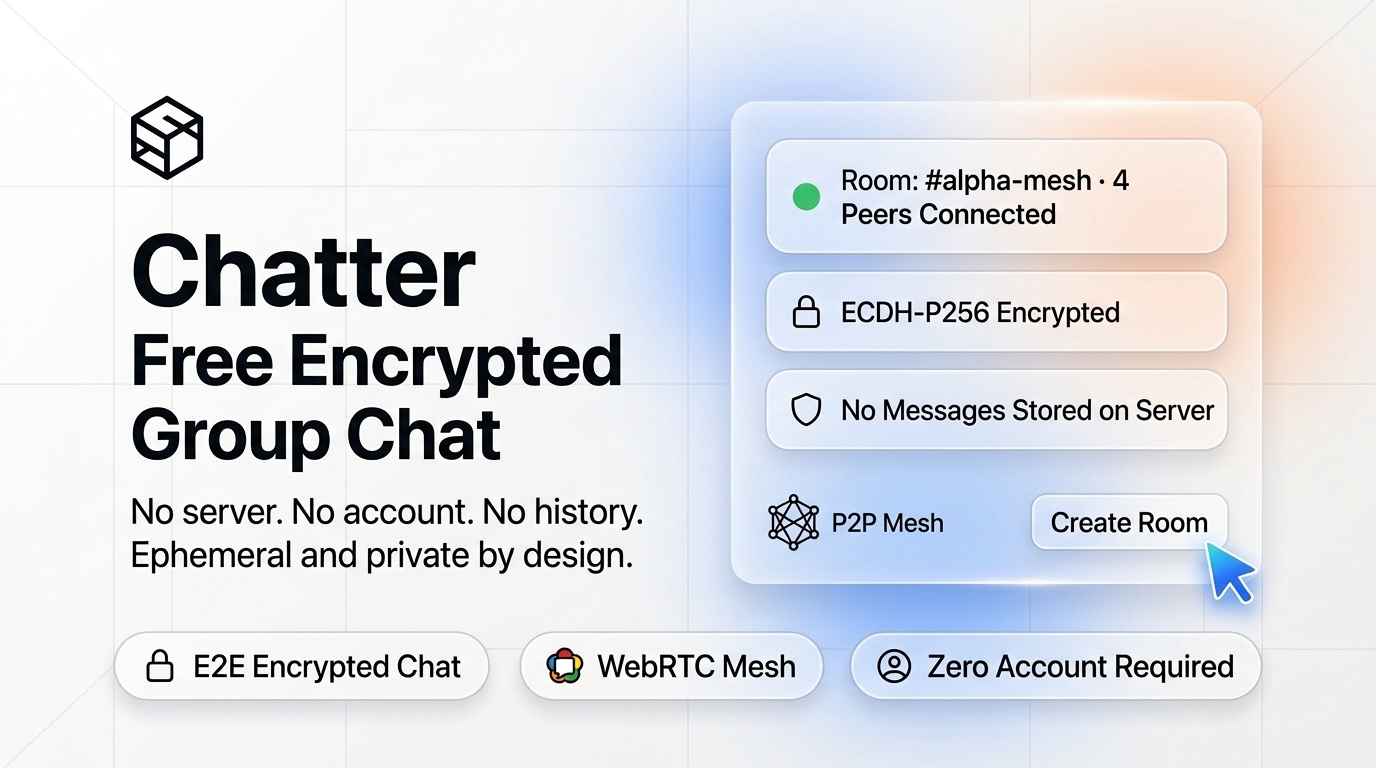
In today's hyper-connected communications landscape, the phrase "end-to-end encrypted messaging" has become ubiquitous. Major tech platforms advertise military-grade encryption, yet nearly every popular messaging service—including WhatsApp, Telegram, and even Signal—imposes a critical privacy compromise at the front door: they require a verified mobile telephone number (SIM card) or email address to register.
By tying your cryptographic identity to a government-registered phone number, your communications metadata becomes permanently deanonymized. Telecommunications carriers, data brokers, and intelligence agencies may not be able to read the encrypted text body, but they can easily log who you are speaking to, when the conversation occurred, how frequently you connect, and your physical cell tower geolocation.
For journalists communicating with confidential sources, cybersecurity teams coordinating during an active corporate ransomware breach, whistleblowers reporting corporate wrongdoing, or friends simply having a private discussion, true digital freedom requires zero-knowledge ephemerality: zero accounts, zero phone numbers, zero server logs, and messages that exist strictly in volatile device RAM.
In this architectural guide, we dissect how modern browser-native cryptography enables fully anonymous group chat, explain how RFC 3986 URL fragments keep decryption keys hidden from web servers, and demonstrate how to launch instant secure chat rooms with ShiftTools Chatter.
Looking for an instant, private Free Encrypted Chat?
Process, inspect, and export your files 100% locally in your browser memory with zero server uploads.
1. The Problem with Account-Based Messaging
To understand why an account-free architecture is revolutionary, we must examine the vulnerabilities inherent in account-based messaging platforms:
A. The Phone Number Identifier Vulnerability
In almost every country, purchasing a SIM card requires national identity verification, biometric registration, or credit card billing. When you use your mobile number as your chat identity, your cryptographic public keys are indexed against your legal identity. If an adversary executes a SIM-swap attack against your mobile carrier, they can intercept SMS verification codes and attempt to hijack your communication channels.
B. Metadata Harvesting & Cloud Backup Traps
Even when messages are encrypted in transit, central servers log communication graphs. Furthermore, default cloud backup settings (such as exporting chat histories to Google Drive or Apple iCloud) regularly store unencrypted or escrowed database backups outside the protection of end-to-end encryption.
C. Permanent Digital Paper Trails
Corporate chat tools like Slack, Microsoft Teams, and Discord retain full conversation histories permanently on central servers. During civil litigation, corporate acquisitions, or law enforcement subpoenas, these historical archives can be seized and searched years after the conversation occurred.
In a truly ephemeral chat system like ShiftTools Chatter, messages never touch a hard disk, database table, or server log. Text packets reside solely in the volatile RAM of active browser tabs. The moment you close the tab, the encryption keys and message arrays are erased from memory forever.
2. Cryptographic Architecture: In-Memory AES-256-GCM
A. The Zero-Knowledge URL Fragment Mechanism (RFC 3986)
When you create a room on ShiftTools Chatter, your browser's window.crypto engine generates a high-entropy 256-bit random key. This key is appended to the invite link as a URL Hash Fragment:
https://shifttools.in/chatter/#k=9f8a2b3c4d5e6f7a8b9c0d1e2f3a4b5c
Under the fundamental HTTP specification (RFC 3986), web browsers never send the fragment portion of a URL across the network to the hosting server. When an invitee clicks that link, the ShiftTools web server only sees a request for /chatter/. The decryption key k=... remains strictly inside the user's browser, ensuring that our infrastructure possesses zero technical capability to decrypt messages.
B. Authenticated Symmetric Encryption: AES-256-GCM
Every chat message, typing status, and file payload is encrypted using AES-256-GCM (Galois/Counter Mode). GCM provides both confidentiality (preventing eavesdroppers from reading the message) and integrity authentication (generating an authentication tag that prevents tampering, truncation, or bit-flipping attacks in transit).
For every individual message sent, the browser generates a fresh, cryptographically random 96-bit Initialization Vector (IV). This guarantees that sending the identical phrase twice will produce completely distinct, uncorrelated ciphertext streams.
3. Blinded Signaling vs Peer-to-Peer Data Meshes
To facilitate real-time group collaboration across firewalls, ShiftTools utilizes a blinded zero-knowledge publish-subscribe architecture:
- Blinded Relaying: When Participant A types a message, the browser encrypts it locally with the room key. The resulting ciphertext payload is broadcast to room subscribers via a lightweight WebSocket relay.
- Zero Content Visibility: The relay server functions like a blind courier. It handles socket routing between room IDs, but cannot inspect, parse, or log the underlying content.
- WebRTC Direct P2P Channels: When direct network conditions allow, peers establish direct WebRTC data channels with DTLS encryption, transmitting messages and media peer-to-peer without even touching the relay.
| Privacy Vector | ShiftTools Chatter | Signal | Telegram (Standard Groups) | |
|---|---|---|---|---|
| Account Requirement | Zero (None required) | Phone Number | Phone Number | Phone Number |
| Server Message Storage | 0 Bytes (Volatile RAM only) | Transient in transit | Transient in transit | Permanent Cloud Database |
| Server Key Knowledge | Zero (URL Hash Fragment) | Zero | Zero | Server Holds Decryption Keys |
| Identity Metadata Logs | None (No persistent IDs) | Minimal (Sealed Sender) | High (Contact graphs logged) | High (Full server metadata) |
| Disappears on Tab Close | Instant & Guaranteed | Requires manual timer | Requires manual timer | Manual deletion required |
4. Real-World Use Cases: When to Use Ephemeral Group Chat
Anonymous, account-free group chat is essential for several high-stakes scenarios:
- Cybersecurity Incident Response (Out-of-Band Channel): When a company's internal network, Active Directory, or email infrastructure is compromised by ransomware, incident response teams cannot communicate over corporate Slack or Teams. ShiftTools Chatter provides an immediate, out-of-band, encrypted room reachable on any device.
- Confidential Journalism & Whistleblowing: Investigative journalists can share a temporary room link with a source. Once the interview concludes and the tab is closed, zero forensic chat logs remain on either device.
- Secure Ephemeral Password Sharing: Sending database credentials or API secrets over email or Slack creates permanent audit logs. Dropping a secret into a temporary Chatter room ensures the recipient reads it and the record vanishes upon disconnect.
- Temporary Multi-Vendor Collaborations: When coordinating with external contractors for a one-day event or negotiation, setting up guest accounts on corporate suites is tedious. A private room link allows instant collaboration with zero onboarding overhead.
5. Step-by-Step Guide: Launching an Encrypted Chat Room
-
Create a New Secure Room
Open ShiftTools Chatter in any modern browser. Click Create Private Room. Your browser will instantly generate a 256-bit cryptographic room key and initialize an ephemeral session in memory.
-
Share the Cryptographic Invite Link
Copy the generated room invite link or display the on-screen QR code for nearby participants to scan with their mobile devices. The decryption key is embedded in the link's hash fragment.
-
Chat with End-to-End Encryption
As participants join, messages are encrypted and decrypted locally using the shared AES-256-GCM key. Share text, code snippets, and short status updates in real-time.
-
Close the Tab to Destroy All Data
When your conversation is finished, simply close the browser tab. The room keys, participant handles, and message histories are immediately zeroized from volatile memory.
Frequently Asked Questions
Ready to use the Free Encrypted Chat?
Use our free, private browser tool right now — 100% client-side with zero server uploads.